

Why Should Farmers Invest in a Farm Biogas Generator?
2025-09-11
Agriculture has always been at the core of food security, rural development, and global sustainability. However, as farms expand and livestock numbers increase, so does the challenge of managing agricultural waste. Uncontrolled waste not only leads to environmental pollution but also creates health hazards for both workers and surrounding communities. This is where the Farm Biogas Generator plays a crucial role, turning challenges into opportunities.
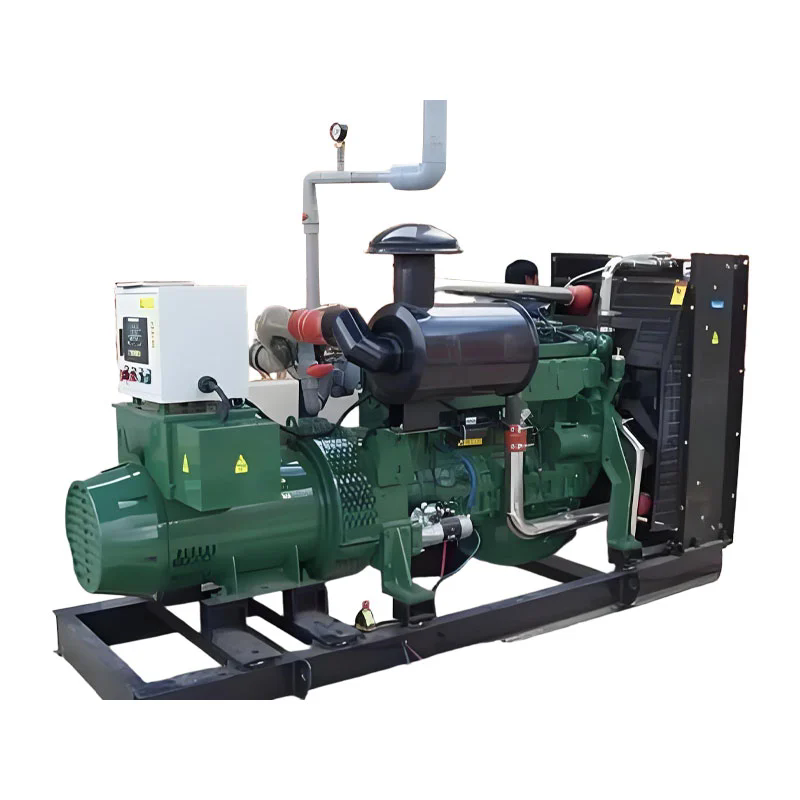
A Farm Biogas Generator is a renewable energy system designed to convert organic waste—such as manure, crop residues, and food scraps—into clean, usable energy. Through the process of anaerobic digestion, microorganisms break down organic matter in an oxygen-free environment, releasing methane gas. This methane is captured and used as fuel to generate electricity, heat, or even converted into biomethane for vehicles.
The benefits extend beyond energy. Farmers reduce greenhouse gas emissions, improve waste management, and save money on fuel and electricity costs. In addition, the by-product of biogas production, known as digestate, can be used as a nutrient-rich organic fertilizer, closing the cycle of sustainable farming.
As governments and industries push for net-zero targets and renewable energy solutions, investing in a Farm Biogas Generator is no longer just an option but a forward-looking necessity. It ensures farmers remain competitive, environmentally responsible, and energy independent.
What Are the Key Features and Parameters of a Farm Biogas Generator?
To make an informed decision, farmers must understand the technical aspects and product parameters of a Farm Biogas Generator. Below is a clear breakdown of the specifications and features that determine its performance and efficiency.
| Parameter | Specification | Importance for Farmers |
|---|---|---|
| Feedstock Capacity | 5–500 tons/day (depending on model) | Determines the scale of waste input the system can handle. |
| Biogas Yield | 0.4–0.6 m³/kg organic matter | Indicates how much usable gas can be generated per unit of waste. |
| Energy Output | 50 kW – 2 MW (electric) | Matches farm electricity and heating requirements. |
| Digester Type | Continuous Stirred Tank Reactor (CSTR) or Plug Flow | Ensures consistent gas production and easy operation. |
| Gas Composition | 50–65% Methane, 35–45% CO₂, trace H₂S | Determines quality and efficiency of energy production. |
| Operating Temperature | Mesophilic (30–40°C) or Thermophilic (50–60°C) | Affects speed and efficiency of digestion. |
| By-product | Digestate (solid & liquid) | Can be reused as organic fertilizer. |
| Lifespan | 15–20 years with proper maintenance | Ensures long-term reliability and return on investment. |
| Automation | PLC/SCADA control systems | Provides easy monitoring and smart operation. |
These technical elements ensure that the Farm Biogas Generator can adapt to different farm sizes, livestock scales, and environmental conditions. For small-scale farms, compact digesters are available to handle limited manure output. Large-scale operations benefit from industrial-grade generators with automated feeding systems and integrated power generation units.
An added advantage is the scalability of these systems. Farmers can start with a smaller generator and upgrade as their production expands, ensuring flexibility in long-term investments.
How Does a Farm Biogas Generator Improve Sustainability and Profitability?
Farmers often ask whether investing in a Farm Biogas Generator is financially viable and environmentally beneficial. The answer lies in the multiple layers of benefits that go beyond just renewable energy.
Environmental Benefits
-
Waste Reduction: Organic waste is no longer dumped or burned but converted into usable energy.
-
Lower Carbon Emissions: By capturing methane—a greenhouse gas 25 times more potent than CO₂—biogas systems significantly reduce climate impact.
-
Odor Control: Anaerobic digestion minimizes foul smells from manure and food waste.
-
Nutrient Recycling: Digestate provides a closed-loop fertilizer alternative, reducing dependence on synthetic chemicals.
Economic Benefits
-
Energy Independence: Farms can generate their own electricity, heating, and even vehicle fuel.
-
Cost Savings: Lower energy bills and reduced fertilizer purchases.
-
New Revenue Streams: Excess electricity can be sold back to the grid in regions with feed-in tariffs.
-
Government Incentives: Many countries provide subsidies, tax credits, or low-interest loans for biogas projects.
Operational Benefits
-
Farm Efficiency: Streamlined waste management saves labor and improves hygiene.
-
Scalability: Systems can grow with farm expansion.
-
Reliability: Biogas systems run continuously, unlike intermittent solar or wind energy.
When these factors are combined, a Farm Biogas Generator becomes not only an environmental solution but also a profitability enhancer. For many farmers, payback periods range from 4 to 7 years, depending on local incentives and energy prices. After that, the system continues to generate free energy and fertilizer for years to come.
Common Questions About Farm Biogas Generators
Q1: How long does it take for a Farm Biogas Generator to start producing energy after installation?
A Farm Biogas Generator typically requires a startup period of 30 to 60 days, depending on the feedstock and digester type. During this time, microorganisms establish a stable digestion ecosystem. Once stabilized, gas production becomes continuous and predictable, ensuring a reliable energy source for the farm.
Q2: Can small farms benefit from a Farm Biogas Generator, or is it only suitable for large-scale operations?
Yes, small farms can also benefit. Compact biogas units are available for smaller waste volumes, allowing even small-scale livestock or crop farms to generate clean energy. These systems are modular, so farmers can expand capacity as operations grow. The digestate produced can directly replace chemical fertilizers, offering immediate savings.
The agricultural industry is under increasing pressure to balance productivity with sustainability. Waste management, energy security, and environmental compliance are challenges that every modern farmer must face. A Farm Biogas Generator provides a powerful solution by transforming waste into renewable energy and valuable fertilizer. It enhances profitability while supporting global sustainability goals.
Forward-thinking farmers are already leveraging this technology to secure long-term advantages. By investing in biogas systems, farms not only achieve independence from fluctuating fuel prices but also contribute to reducing global greenhouse gas emissions.
Brands like Kecheng are committed to delivering high-quality Farm Biogas Generators tailored to the specific needs of farms worldwide. With advanced technology, proven reliability, and customizable solutions, Kecheng helps farmers embrace a greener, more profitable future.
If you are considering upgrading your farm with a biogas solution, now is the time to act. Contact us today to learn more about how a Farm Biogas Generator can transform your agricultural operations.