

Why Is Gas Insulated Switchgear (GIS) the Future of Reliable Power Distribution?
2025-10-23
Gas Insulated Switchgear (GIS) represents one of the most innovative advancements in electrical engineering. It is a compact, metal-enclosed system that uses sulfur hexafluoride (SF₆) gas as an insulating medium, enabling high-voltage equipment to operate safely within minimal space. GIS systems are widely applied in substations, power plants, and industrial complexes where space efficiency, reliability, and safety are paramount.
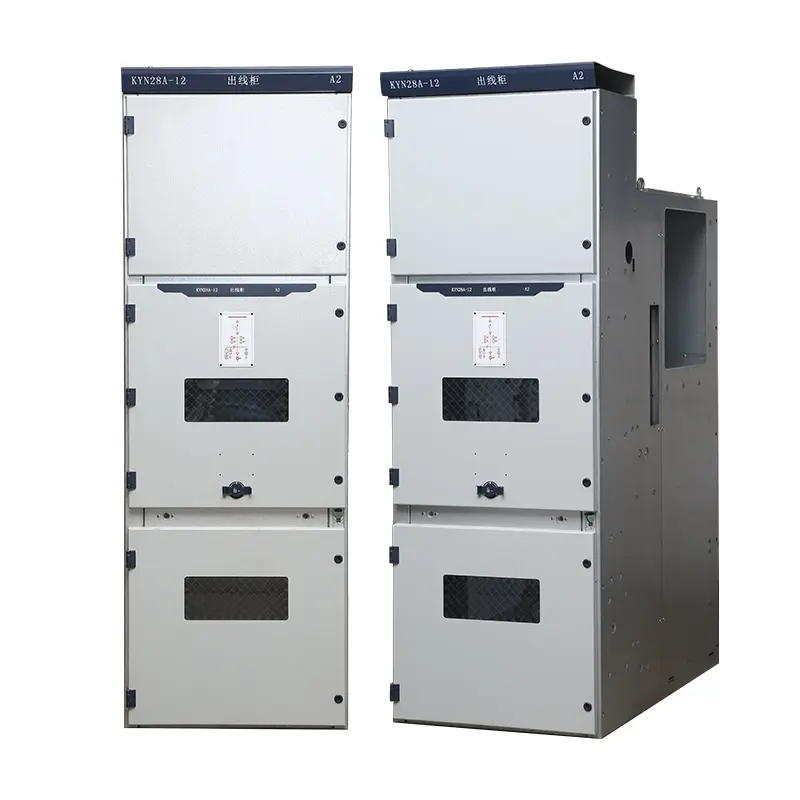
Unlike traditional Air Insulated Switchgear (AIS), GIS integrates circuit breakers, disconnectors, and earthing switches within a sealed gas chamber. This encapsulated design significantly reduces the influence of environmental factors such as humidity, dust, and pollution. The result is a power system that delivers higher operational stability, lower maintenance requirements, and exceptional durability even under harsh conditions.
Why Is Gas Insulated Switchgear the Preferred Choice for Modern Infrastructure?
The growing demand for compact, eco-friendly, and efficient energy systems has accelerated the adoption of Gas Insulated Switchgear. Traditional substations often require large areas for installation and are susceptible to atmospheric contamination. GIS eliminates these limitations by encapsulating all active components inside gas-insulated enclosures.
Key Advantages of GIS:
-
Space Efficiency
GIS occupies up to 90% less space compared to Air Insulated Switchgear, making it ideal for urban and underground installations where land is limited. -
Enhanced Safety and Reliability
The sealed gas environment ensures zero exposure to atmospheric contamination, significantly reducing the risk of flashovers or equipment failure. -
Low Maintenance
Since the components are enclosed and unaffected by environmental factors, GIS requires minimal maintenance and offers a service life exceeding 30 years. -
High Performance Under Stress
GIS can operate effectively in extreme climates, including high humidity, coastal, desert, and industrial environments. -
Environmentally Adaptable Design
Modern GIS solutions now use alternative insulating gases with lower Global Warming Potential (GWP) to replace SF₆, aligning with sustainability goals and international emission standards. -
Reduced Electromagnetic Interference
The metallic enclosure provides inherent shielding, minimizing electromagnetic interference (EMI) in densely populated areas. -
Superior Operational Control
Integrated digital sensors and monitoring systems enable remote supervision, predictive maintenance, and real-time data analytics for smart grid integration.
What Are the Main Components and Specifications of Gas Insulated Switchgear?
GIS systems are modular in design, meaning each component is assembled as part of a compact bay or unit. Below is a detailed breakdown of the typical configuration and technical parameters found in a medium to high-voltage Gas Insulated Switchgear.
| Parameter | Specification Range | Description |
|---|---|---|
| Rated Voltage | 12kV – 800kV | Suitable for both medium and high-voltage networks |
| Rated Current | 630A – 5000A | Determines the current-carrying capacity of each bay |
| Short-Time Withstand Current | Up to 63kA | Ability to endure fault conditions for up to 3 seconds |
| Insulating Gas Type | SF₆ or eco-friendly alternatives (e.g., g³, N₂ mixtures) | Provides dielectric insulation |
| Operating Frequency | 50Hz / 60Hz | Compatible with global grid standards |
| Rated Lightning Impulse Withstand | Up to 1950kV | High resistance to voltage surges |
| Operating Temperature | -30°C to +55°C | Wide range for outdoor and underground environments |
| Degree of Protection | IP65 / IP67 | Ensures complete protection against dust and moisture |
| Life Expectancy | 30+ years | Proven long-term operational stability |
| Control System | Digital / SCADA compatible | Enables remote operation and monitoring |
These specifications highlight the precision engineering behind GIS. Each parameter ensures optimal performance and longevity across different applications, from urban substations to offshore wind farms.
How Does Gas Insulated Switchgear Improve Efficiency and Sustainability?
The energy landscape is shifting toward renewable integration, digitalization, and sustainability. GIS plays a critical role in this transformation by offering advanced protection and monitoring systems that align with the future of smart grids.
1. Compact and Modular Design
GIS allows multi-level substations to be constructed in confined spaces such as basements, high-rise buildings, and tunnels. Modular designs enable easy expansion, reducing future investment costs.
2. Digital Monitoring and Automation
Modern GIS integrates sensors and IoT-based technologies that track insulation health, gas pressure, and temperature in real time. Predictive diagnostics help identify issues before failure occurs, minimizing downtime.
3. Environmental Responsibility
With the push toward carbon neutrality, manufacturers are introducing SF₆-free GIS systems that use natural gases or synthetic alternatives with low GWP. This innovation contributes to global climate targets while maintaining insulation integrity.
4. Extended Equipment Lifespan
Because of its hermetically sealed design, GIS operates in a controlled internal environment, preventing oxidation and corrosion. This drastically extends its operational life compared to conventional switchgear.
5. Adaptability Across Industries
From renewable energy integration to industrial manufacturing and transportation, GIS provides unmatched versatility. It is increasingly being used in:
-
Offshore wind farms
-
Urban substations
-
Rail transportation systems
-
Mining operations
-
Data centers
-
Smart cities infrastructure
These applications highlight the flexibility and reliability of GIS across diverse sectors.
What Are the Common Questions About Gas Insulated Switchgear?
Q1: What is the difference between GIS and Air Insulated Switchgear (AIS)?
A: GIS uses SF₆ gas as an insulating medium within a sealed metal enclosure, making it compact and resistant to environmental factors. In contrast, AIS relies on air for insulation and requires larger clearances between components. As a result, GIS is more reliable, safer, and space-saving but comes with a higher initial investment.
Q2: Is SF₆ gas harmful to the environment, and are there alternatives?
A: SF₆ is a potent greenhouse gas with a high GWP, but its use in GIS is tightly regulated and monitored. New-generation GIS technologies now adopt eco-efficient gases such as g³ (Green Gas for Grid) and N₂-based mixtures, which reduce environmental impact by up to 99%. Many leading manufacturers have already transitioned to these sustainable solutions without compromising performance.
Q3: How long does GIS equipment typically last, and what maintenance does it require?
A: A well-maintained GIS can last over 30 years, requiring only periodic gas monitoring and sensor diagnostics. Unlike AIS, GIS has no exposed parts and is largely maintenance-free, reducing total lifecycle costs and operational interruptions.
How Will Gas Insulated Switchgear Shape the Future of Power Systems?
The shift toward renewable energy, smart grids, and urbanization underscores the importance of technologies that can meet modern demands without expanding the physical footprint of substations. Gas Insulated Switchgear stands at the center of this transformation.
As nations upgrade their electrical networks to handle higher loads and renewable inputs, GIS will become the core infrastructure ensuring safety, reliability, and efficiency. Digital integration and automation will further enable remote diagnostics and smart control, paving the way for intelligent power distribution systems.
In the coming decade, GIS technology is expected to evolve toward:
-
SF-free and recyclable gas alternatives
-
Enhanced digital sensors for real-time monitoring
-
Compact hybrid switchgear solutions combining AIS and GIS advantages
-
Integration with AI-driven grid management systems
These developments will redefine energy transmission and distribution standards worldwide.
Conclusion: SYHF Leading the Future of Gas Insulated Switchgear
Gas Insulated Switchgear has redefined the benchmarks of safety, efficiency, and sustainability in power distribution. As industries demand compact, intelligent, and environmentally responsible solutions, GIS continues to stand as the foundation for modern substations and smart grids.
SYHF is dedicated to delivering high-quality Gas Insulated Switchgear engineered for performance, longevity, and environmental compliance. Each system undergoes rigorous testing to ensure superior reliability and adaptability to global energy demands.
For tailored GIS solutions, system integration support, or consultation on large-scale electrical infrastructure, contact us today to discover how SYHF can help build a safer, smarter, and more sustainable energy future.