

Why Choose a 500kW Biogas Generator for Sustainable Power?
2025-09-15
The global energy landscape is undergoing a rapid transformation as industries, municipalities, and private enterprises seek cleaner and more reliable sources of power. Among the growing alternatives, biogas generation has emerged as one of the most sustainable and efficient solutions. A 500kW Biogas Generator sits at the heart of this transformation, providing not only renewable power but also a method to utilize organic waste streams in a productive way.
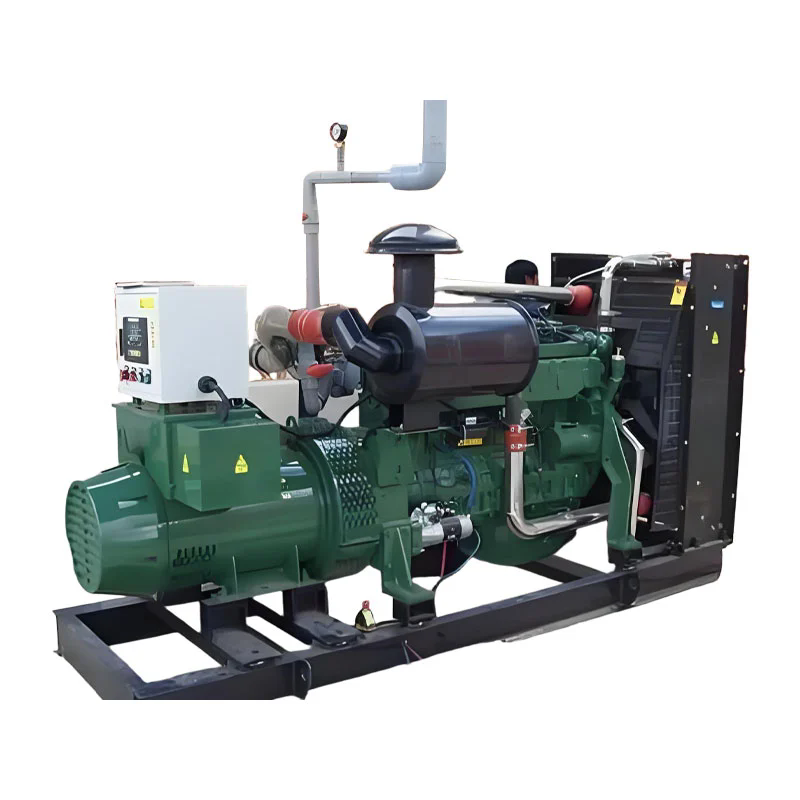
Biogas is typically produced through anaerobic digestion, a process where organic materials such as agricultural waste, food waste, livestock manure, and even industrial by-products are broken down by microorganisms in the absence of oxygen. The resulting methane-rich gas is then captured and used as fuel in biogas generators. For facilities that demand a consistent and sizable energy supply, the 500kW capacity strikes the perfect balance between scalability and practicality.
Unlike smaller biogas units, which may only serve limited farm operations, a 500kW system can support medium-to-large agricultural enterprises, food processing plants, and even contribute to local grid power. At the same time, it avoids the logistical complexities of larger, multi-megawatt systems that require extensive infrastructure. This makes it particularly suitable for businesses seeking to both reduce operational costs and enhance sustainability initiatives.
The importance of adopting this technology extends beyond cost savings. Governments around the world are incentivizing renewable energy projects, and biogas stands out because it tackles two issues simultaneously: waste management and energy generation. This dual advantage means companies can improve their environmental credentials while contributing to the circular economy.
How Does a 500kW Biogas Generator Work and What Are Its Core Features?
To appreciate the value of a 500kW Biogas Generator, it is important to understand how it functions and the specifications that set it apart. At its core, this generator converts methane-rich biogas into electrical power through a combustion process similar to conventional natural gas engines. However, the difference lies in the adaptability of the engine to handle variable gas compositions while maintaining high efficiency.
The process can be outlined in several steps:
-
Biogas Production – Organic material undergoes anaerobic digestion in sealed digesters, producing methane and carbon dioxide.
-
Gas Cleaning and Conditioning – Before reaching the generator, the biogas is cleaned to remove impurities such as hydrogen sulfide, moisture, and particulates.
-
Fuel Supply to the Generator – The treated biogas is directed into the generator’s combustion chamber.
-
Power Generation – The internal combustion engine converts the fuel into mechanical energy, which is then transformed into electricity by an alternator.
-
Heat Recovery (Optional CHP) – The system can also capture waste heat from the engine for heating water, industrial processes, or district heating networks.
Key Technical Parameters of a 500kW Biogas Generator:
| Parameter | Specification |
|---|---|
| Rated Power Output | 500kW |
| Fuel Type | Biogas (Methane-rich, typically 45–65% CH₄) |
| Voltage Range | 400V / 50Hz (customizable for regional grids) |
| Electrical Efficiency | 38% – 42% |
| Thermal Efficiency (CHP) | 40% – 45% |
| Combined Efficiency (CHP) | Up to 85% |
| Engine Type | Four-stroke, turbocharged, low-NOx design |
| Cooling System | Water-cooled |
| Control System | Digital monitoring with automatic protection |
| Lifespan (with maintenance) | 15–20 years |
One of the most remarkable features of modern 500kW Biogas Generators is their digital integration. Intelligent control systems provide real-time monitoring of engine performance, gas quality, and load requirements. This ensures maximum uptime while minimizing maintenance costs.
Additionally, emissions are significantly lower compared to fossil-fuel generators, thanks to optimized combustion processes and exhaust treatment systems. This aligns with increasingly strict environmental regulations and corporate ESG (Environmental, Social, Governance) standards.
For facilities seeking not just power but also energy optimization, the CHP capability of these generators provides a massive advantage. By recovering otherwise wasted heat, operators can achieve an efficiency level nearly double that of standalone electricity generation. This is particularly beneficial for greenhouses, industrial plants, or community heating projects.
What Benefits Does a 500kW Biogas Generator Deliver to Businesses and Communities?
The benefits of investing in a 500kW Biogas Generator extend far beyond the immediate supply of electricity. For businesses and communities, the advantages cover financial, operational, and environmental aspects.
Key Benefits:
-
Cost Reduction: Utilizing on-site biogas reduces reliance on external energy suppliers, lowering electricity bills and protecting against volatile energy prices.
-
Waste Management: Agricultural and industrial waste that would otherwise pose environmental hazards can be converted into useful energy.
-
Carbon Reduction: Replacing fossil fuels with renewable biogas significantly lowers greenhouse gas emissions.
-
Energy Security: On-site power generation ensures stability, especially in regions prone to grid instability.
-
Government Incentives: Many countries offer feed-in tariffs, subsidies, or tax breaks for renewable energy projects.
-
Scalability: A 500kW system is large enough to support substantial operations but small enough to be installed without excessive infrastructure investment.
-
Job Creation: Local operation and maintenance of biogas facilities generate employment opportunities.
Case studies across Europe and Asia demonstrate how communities have benefited from mid-sized biogas plants. Farms are using them to turn animal manure into both electricity and fertilizer. Food processing plants are reducing landfill costs while generating revenue from excess power fed into the grid. Municipalities are deploying them to achieve climate goals while ensuring energy independence.
The integration of a 500kW biogas unit also strengthens corporate branding. Customers and stakeholders increasingly value businesses that take visible steps toward sustainability. By investing in renewable energy, companies can highlight their commitment to green initiatives, which enhances competitiveness in global markets.
Why Is Now the Right Time to Invest in a 500kW Biogas Generator?
The global push toward decarbonization is accelerating. Energy prices are unpredictable, and regulatory frameworks are pushing industries to adopt renewable solutions. Against this backdrop, a 500kW Biogas Generator emerges as one of the most pragmatic investments available today.
Biogas projects are not just about immediate returns; they create long-term resilience. Once installed, the system provides predictable energy costs for decades. Moreover, as waste streams are unlikely to disappear, the fuel supply remains stable and renewable.
Common Questions About 500kW Biogas Generators
Q1: How much biogas is required to operate a 500kW generator?
A 500kW unit typically requires between 220–250 cubic meters of biogas per hour, depending on methane concentration. This translates to processing several tons of organic waste daily, making it suitable for large farms, food processing plants, or waste treatment facilities.
Q2: What is the expected payback period for investing in a 500kW biogas generator?
The payback period varies depending on local energy tariffs, government incentives, and the availability of feedstock. On average, businesses recover their investment within 4–6 years, after which the generator delivers consistent savings and revenue for up to two decades.
In the present energy transition era, adopting renewable technologies is no longer optional—it is a strategic necessity. The 500kW Biogas Generator is one of the most balanced solutions available, capable of meeting sustainability targets while delivering strong financial performance.
Companies like kecheng are leading this transformation by offering advanced generator systems that combine efficiency, durability, and cost-effectiveness. If your business or community is ready to take the next step toward energy independence and environmental responsibility, now is the time to act.
Contact us today to explore how a 500kW Biogas Generator can be tailored to your specific energy needs.