

Article Summary: Choosing a solar pump starts with the water requirement rather than the motor power printed on a product label. Flow rate, total dynamic head, water source, pipeline losses, daily operating hours, solar availability, storage capacity and irrigation requirements all affect the final system configuration. A correctly matched solar pumping system can supply water in remote areas without relying entirely on grid electricity, while poor sizing can result in insufficient flow, unstable operation, excessive investment or premature equipment problems. This guide explains the main technical factors buyers, installers and agricultural users should review
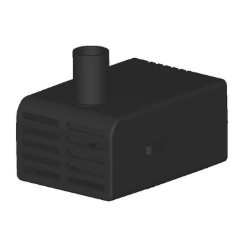
Understanding the Solar Pump System
A solar pump uses electricity generated by photovoltaic panels to operate a water pump. Depending on the installation, the pump may draw water from a well, borehole, reservoir, river, tank or other suitable source and deliver it to an irrigation network, elevated storage tank, livestock watering point or domestic water supply system.
In a complete solar-powered pumping installation, the pump is only one part of the equipment package. A typical system can include photovoltaic panels, mounting structures, a pump controller or inverter, the electric motor and pump, pipes, valves, sensors and water storage. FAO describes these as key elements of a solar-powered irrigation system, with surface and submersible pumps used according to site conditions.
Solar Energy Source
The photovoltaic array converts sunlight into electrical energy. Its available output changes with solar radiation, temperature, shading, panel orientation and other site conditions.
Pump and Motor
The pump converts mechanical energy into hydraulic energy, moving water against the required head and through the delivery system.
Controller or Inverter
The controller manages the electrical supply to the motor and can help the pump operate effectively under changing solar input.
Water Distribution
Pipes, valves, tanks and irrigation equipment determine how efficiently the pumped water reaches its final point of use.
This is why simply asking for a “2 kW solar pump” is usually not enough information for a reliable recommendation. A pump's rated power does not by itself describe how much water it will deliver at a particular lifting height.
Matching the Pump to the Application
Different water projects place different demands on a pumping system. A small vegetable garden may need moderate flow at relatively low pressure, while a deep borehole supplying a large irrigation network may require a submersible pump capable of operating against substantially greater head.
| Application | Typical Requirement | Important Design Point |
|---|---|---|
| Farm irrigation | Stable daily water volume | Crop demand, irrigation method, flow and head |
| Borehole water supply | Vertical lifting from underground water | Dynamic water level and total head |
| Livestock watering | Reliable water availability | Peak demand and storage capacity |
| Tank filling | Daily filling volume | Tank elevation and required filling time |
| Remote water supply | Independent operation | Solar resource, controls, protection and backup strategy |
For irrigation projects, water demand should be established before selecting the pump. The FAO-listed Solar Irrigation Pump sizing methodology considers crop water requirements, discharge estimation, head losses and pump selection as separate parts of the design process.
This approach prevents a common procurement problem: buying a pump according to horsepower alone and discovering after installation that the actual water output does not meet the project's requirements.
Calculating the Main Sizing Requirements
Start with the Required Flow
Flow rate describes how much water needs to be delivered over a given period. It may be expressed in litres per minute, litres per hour or cubic metres per hour. For agricultural projects, daily water demand can be more useful than looking at instantaneous flow alone.
Required daily water volume = required flow rate × operating time
For example, if an installation needs 30,000 litres per day and the pump is expected to operate for approximately 6 effective pumping hours, the average required output is around 5,000 litres per hour. The final design still needs to account for available solar energy, hydraulic losses and the pump's actual performance curve.
Then Determine Total Dynamic Head
Total dynamic head is one of the most important parameters in pump selection. It is not simply the depth of the well. The calculation should consider the vertical lifting requirement together with pressure requirements and friction losses in the pipework and fittings.
This distinction matters because two projects using the same water source may require very different pumps. A short pipe delivering water into a low-level tank may have relatively modest losses, while a long pipeline with elevation changes, bends, filters and pressure-regulated irrigation equipment can significantly increase the required head.
Consider Solar Conditions
Solar pumping does not provide a fixed electrical input throughout the day. Solar radiation changes with time, weather, season and location. Technical studies on photovoltaic water pumping therefore include factors such as solar irradiation, temperature, PV capacity and hydraulic losses when sizing the system.
For this reason, a system designed around an ideal sunny day may not provide the same water volume every day. Site-specific solar data and the required water delivery schedule should be considered before finalizing the PV array and pump combination.
Understanding the Complete System
A dependable solar pump project is a matched system rather than a collection of unrelated components. The electrical output of the PV array, controller characteristics, motor requirements and pump curve should work together.
- PV panels: provide the electrical energy required by the pumping system.
- Mounting structure: positions the panels securely and helps maintain the intended solar exposure.
- Controller/inverter: manages power delivery and motor operation.
- Submersible or surface pump: selected according to water source and hydraulic conditions.
- Protection devices: help address conditions such as dry running, overload or abnormal operation where applicable.
- Pipelines and valves: transport and regulate the pumped water.
- Storage tank: can separate the timing of water pumping from the timing of water consumption.
- Monitoring equipment: can provide information about flow, pressure, water level or system performance.
FAO notes that water storage can be particularly useful because water pumped during periods of solar availability can be stored for later irrigation, reducing the need to depend on battery storage for every application.
Water Source and Installation Conditions
The water source can change the entire pump configuration. Deep groundwater normally requires a submersible pump installed inside the borehole, while water from an accessible tank, pond or reservoir may allow the use of a surface pump depending on suction and installation conditions.
Before ordering equipment, record the following information:
- Well or borehole depth
- Static water level
- Expected dynamic water level while pumping
- Required daily water volume
- Required flow rate
- Vertical elevation to the delivery point
- Pipeline length and approximate diameter
- Number of major valves, elbows, filters and fittings
- Required outlet pressure
- Local solar conditions and seasonal changes
A system that ignores groundwater behavior, climate, pipeline characteristics or actual water demand can suffer from unstable operation or inadequate output. Research on photovoltaic pumping performance has likewise highlighted the importance of site-specific conditions rather than relying only on nominal pump and PV ratings.
Why Water Storage Matters
One of the practical strengths of solar pumping is that the system can store energy in the form of water. Instead of attempting to keep the pump operating whenever water is needed, the pump can fill an elevated or ground-level storage tank during suitable solar conditions, after which water can be distributed according to the project's schedule.
This arrangement can be particularly useful when irrigation is required in the early morning, late afternoon or during periods when solar output is lower. It can also reduce the need for a large battery bank in systems where water storage is technically and economically practical. FAO identifies pumped-water storage as an important alternative to electrical energy storage in suitable solar irrigation applications.
Water Storage
Stores pumped water and allows consumption to occur independently of the exact moment of solar production.
Battery Storage
Stores electrical energy, but adds battery cost, maintenance requirements and replacement considerations.
The right approach depends on the project. A small domestic installation may have different requirements from a large agricultural pumping system, so storage should be considered as part of the overall design rather than added after the pump has already been selected.
Common Solar Pump Purchasing Mistakes
1. Selecting by Motor Power Alone
A higher-rated motor does not automatically mean more usable water at the required outlet. Pump performance depends on the relationship between flow and head.
2. Using Well Depth as the Only Head Value
The water level changes during pumping, and the delivery pipe can introduce additional losses. Total dynamic head should be calculated for the actual operating condition.
3. Ignoring the Pipeline
Long pipelines, small pipe diameters, filters, valves and multiple fittings can increase friction losses. The pump must be selected for the complete hydraulic system rather than the water source alone.
4. Assuming Constant Solar Output
PV output changes throughout the day and across seasons. A system should be assessed using realistic solar conditions rather than an idealized maximum output.
5. Buying the Pump Before Defining Water Demand
If the required daily volume has not been established, it is difficult to determine whether the selected pump and solar array can actually complete the required work.
6. Treating the Pump as a Stand-Alone Product
A solar pumping project involves electrical, hydraulic and installation components. A mismatch between the PV array, controller, motor and pump can undermine the performance of otherwise good-quality equipment.
Maintenance and Long-Term Operation
Solar pumping systems generally have fewer fuel-related operating requirements than diesel pumping equipment, but they still require routine inspection. Maintenance should be based on the pump type, water quality, installation environment and operating schedule.
- Keep PV panels reasonably clean and free from avoidable shading.
- Inspect electrical connections and controller indicators according to the equipment instructions.
- Monitor changes in flow rate or pressure.
- Check pipes, valves and fittings for leakage.
- Monitor borehole water level where groundwater pumping is involved.
- Check storage tanks and level-control equipment.
- Investigate unusual vibration, noise, repeated starting or unexpected shutdowns.
Performance monitoring is useful because a gradual reduction in delivered water can reveal a developing problem before it becomes a complete system failure. In larger solar irrigation installations, monitoring flow, pressure and pump performance can also support better water management.
Working with a Reliable Solar Pump Supplier
For distributors, agricultural contractors and project buyers, the supplier's technical support can be just as important as the pump itself. A suitable supplier should be able to discuss the intended application, water source, required flow, total head and solar configuration before confirming a model.
When requesting a quotation, providing complete project information can make the technical evaluation much more accurate. A useful inquiry should include the required water volume, operating period, water source, lifting height, pipe length, delivery point, power conditions and location.
| Information to Send | Why It Matters |
|---|---|
| Required flow | Determines the necessary pumping capacity. |
| Total head or elevation data | Defines the hydraulic operating point. |
| Water source | Helps determine surface or submersible pump configuration. |
| Daily water requirement | Helps establish the required operating duration and PV capacity. |
| Pipeline information | Allows friction and fitting losses to be considered. |
| Installation location | Supports assessment of solar conditions and environmental factors. |
Fujian Yuanhua Pump Industry Co., Ltd. can be positioned as a technical partner for buyers who need to evaluate a solar pump according to the actual pumping application rather than simply selecting a model from a product list. For project-based purchasing, discussing the operating point and complete system requirements in advance can help reduce the risk of an unsuitable configuration.
Solar Pump FAQ
What is a solar pump used for?
A solar pump is used to move water using electricity generated by photovoltaic panels. Common applications include agricultural irrigation, borehole water supply, livestock watering, tank filling and remote water supply projects.
Can a solar pump work without batteries?
Yes. A solar pumping system can operate without batteries when water is pumped during available solar periods. A storage tank can then hold the water for later use. The appropriate arrangement depends on the application's water demand and operating schedule.
How do I calculate the solar pump size?
Start with the required water volume and flow rate, then determine the total dynamic head, pipeline losses, operating schedule and local solar conditions. The pump and PV array should then be matched to the actual system requirements. A proper sizing process should not rely on motor horsepower alone.
Is a submersible solar pump suitable for a deep well?
Submersible pumps are commonly used for borehole and deep-well applications because the pump can be installed below the water level. The final model should still be selected according to borehole diameter, water level, required flow, total head and water quality.
Does cloudy weather stop a solar pump?
Reduced solar radiation can reduce available electrical power and therefore affect pumping performance. System behavior depends on the PV array, controller, pump characteristics and system configuration. Water storage can provide an additional buffer when continuous water availability is required.
Why does a solar pump deliver less water than expected?
Possible causes include insufficient solar input, excessive total head, pipeline losses, incorrect pump selection, changing groundwater levels, blocked pipes or filters, electrical problems or an incorrectly matched PV and pump system. Measuring actual flow and pressure is a useful first troubleshooting step.
Should I choose the highest-power solar pump available?
Not necessarily. The correct pump is determined by the required operating point, including flow and head, together with the available solar power. Oversizing can increase equipment and system costs without solving the underlying hydraulic requirement.
What information should I provide when requesting a solar pump quotation?
Provide the water source, required daily volume, target flow, lifting height, pipe length and diameter, required outlet pressure, operating hours and installation location. Photos, borehole data and existing system information can also help the supplier assess the application more accurately.
Need a Solar Pump for Your Water Project?
The right solar pump begins with the right project information. Whether your application involves irrigation, borehole water, livestock, tank filling or remote water supply, share your required flow, head, water source and installation conditions with Fujian Yuanhua Pump Industry Co., Ltd. for a more targeted equipment discussion.