

What Makes Gas Insulated Switchgear the Future of Power Distribution?
2025-09-28
The growth of urban infrastructure, renewable energy integration, and the rising demand for reliable electricity have forced industries and utilities to rethink their approach to power distribution. Traditional air-insulated switchgear has served for decades, but with increasing land scarcity, stricter environmental regulations, and higher voltage needs, it is not always the most efficient solution. This is where Gas Insulated Switchgear (GIS) comes in.
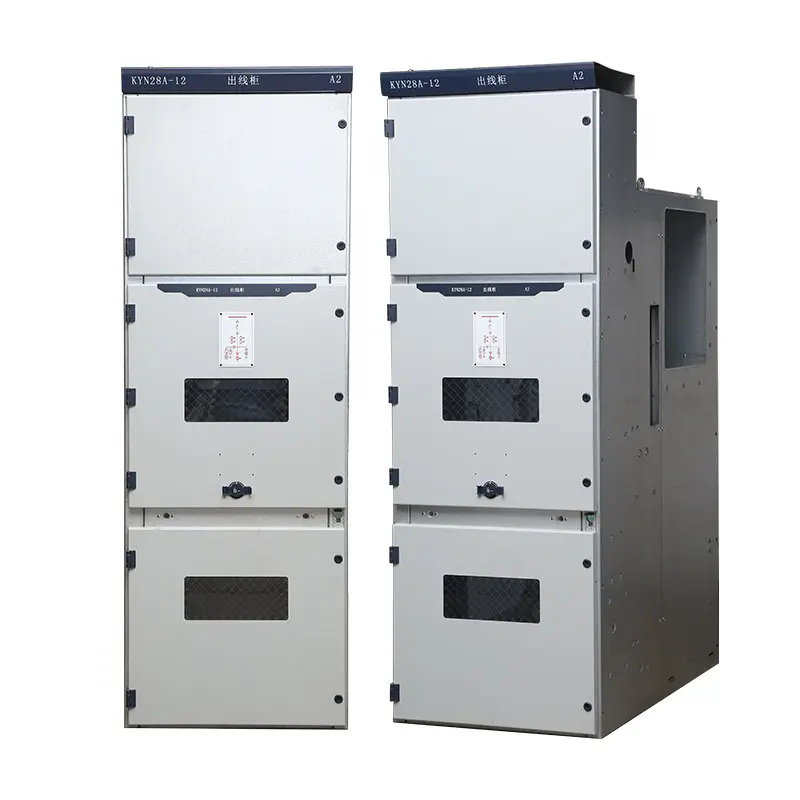
GIS is a compact, safe, and reliable electrical switchgear that uses sulfur hexafluoride (SF₆) or other gas mixtures as the insulating medium. Unlike conventional systems, GIS significantly reduces the footprint required, enhances safety performance, and offers long-term reliability in both industrial and utility-scale applications.
How Does Gas Insulated Switchgear Work and Why Is It Different?
To understand the importance of GIS, it is crucial to first compare it with traditional Air-Insulated Switchgear (AIS). AIS relies on air as the insulating medium, which requires larger clearance distances and occupies much more space. GIS, on the other hand, uses SF₆ gas or a gas mixture with high dielectric properties to insulate live parts, enabling extremely compact designs without compromising safety.
How GIS Works
-
Insulating Medium: SF₆ gas provides superior dielectric strength compared to air, preventing arc formation during switching operations.
-
Encapsulation: All live components such as circuit breakers, disconnectors, and busbars are sealed within a metal enclosure filled with insulating gas.
-
Arc Interruption: In case of faults, GIS breakers extinguish arcs faster than AIS, reducing the chance of damage or outages.
-
Modularity: GIS units are often modular, meaning utilities can expand capacity without significant redesign or land expansion.
Why GIS is Different
-
Compact Footprint – GIS requires up to 70% less space than AIS, making it suitable for cities and industrial complexes.
-
High Reliability – Encapsulation protects equipment from dust, moisture, salt, and industrial pollution.
-
Minimal Maintenance – Unlike AIS, GIS components are sealed and require fewer inspections.
-
Safety – The grounded metallic enclosure reduces the risk of accidental contact and improves personnel safety.
For example, in densely populated cities like Tokyo, Singapore, and Dubai, GIS is preferred due to its small size and robust reliability. Similarly, offshore wind farms and hydropower plants adopt GIS where environmental conditions are too harsh for conventional systems.
What Are the Key Technical Specifications of Gas Insulated Switchgear?
When evaluating GIS, technical specifications play a critical role in determining its suitability for specific applications. Below is a professional overview of typical GIS parameters:
| Parameter | Specification Range |
|---|---|
| Rated Voltage | 72.5 kV – 800 kV |
| Rated Current | Up to 6300 A |
| Short-Circuit Breaking Capacity | 25 kA – 63 kA |
| Insulating Medium | SF₆ or alternative gas mixtures |
| Frequency | 50 Hz / 60 Hz |
| Operating Temperature | -25°C to +55°C (special designs available) |
| Protection Level | IP65 (dust-tight, water-resistant) |
| Service Life | 30 – 40 years (with minimal maintenance) |
| Installation Type | Indoor and Outdoor |
| Modular Design | Yes, extendable as required |
These specifications highlight the durability, adaptability, and robustness of GIS. It is important to note that GIS can be tailored to specific industries, such as high-voltage substations, renewable energy plants, and heavy manufacturing facilities.
Why Should Industries Transition to Gas Insulated Switchgear?
The decision to transition from AIS to GIS is not just about space efficiency. It also reflects broader trends in environmental responsibility, operational resilience, and smart grid development.
Environmental and Land Use Benefits
-
Reduced Land Requirement: Urban substations can be built in underground or indoor facilities, freeing up land for commercial or residential use.
-
Sustainable Development: Alternative gas mixtures are now being developed to replace SF₆, reducing environmental impact while maintaining high performance.
Operational Reliability and Safety
-
Weather-Proof Design: GIS enclosures protect against humidity, dust, and corrosive atmospheres.
-
Seismic Resilience: GIS is often designed to withstand earthquakes, making it a preferred choice in seismic regions.
-
Long Service Life: With up to 40 years of lifespan, GIS minimizes lifecycle costs.
Cost Considerations
While GIS has a higher upfront cost compared to AIS, the long-term savings are significant:
-
Reduced maintenance
-
Longer equipment life
-
Lower risk of power outages
-
Savings from minimized land use
Application Across Industries
-
Urban Power Distribution – Compact substations built in high-rise basements or underground.
-
Renewable Energy Projects – Wind and solar farms use GIS for grid integration in remote or harsh environments.
-
Industrial Facilities – Steel plants, chemical factories, and oil & gas installations benefit from GIS due to reliability and safety.
-
Transportation – Airports, metro stations, and rail networks use GIS to ensure uninterrupted power in busy environments.
Frequently Asked Questions (FAQs)
Q1: What is the main advantage of Gas Insulated Switchgear compared to Air Insulated Switchgear?
A1: The main advantage is compactness and reliability. GIS requires up to 70% less space and is fully enclosed, protecting components from environmental conditions and reducing maintenance needs.
Q2: How long can Gas Insulated Switchgear operate without major maintenance?
A2: With proper installation and monitoring, GIS can operate reliably for 30–40 years. Routine inspections are minimal, and many designs require only periodic gas pressure checks, making it cost-efficient in the long run.
Building a Reliable Future with GIS
As global energy demand grows and urban spaces become more limited, Gas Insulated Switchgear is rapidly emerging as the backbone of modern power distribution systems. Its compact design, safety features, and long service life make it an ideal solution for both urban and industrial applications.
Choosing the right GIS is not just about buying equipment—it is about investing in future-ready infrastructure. Brands such as SYHF deliver high-quality GIS solutions designed for long-term efficiency, sustainability, and performance across diverse industries.
For more details on how SYHF can provide tailored GIS solutions for your power distribution needs, contact us today to discuss your project requirements and find the most reliable switchgear system for your operations.