

What Exactly is a Gate Valve and How Can It Benefit Your System?
2025-09-16
If you're involved in industrial piping, plumbing, or any system that controls fluid flow, you've undoubtedly heard of a gate valve. But with so many valve types available, what makes a gate valve the preferred choice for so many critical applications? As a professional with over two decades in the valve industry, I'll break down everything you need to know about gate valves, focusing on the superior products manufactured by Zhejiang Zhongguan Valve Manufacture Co., Ltd.
A gate valve is primarily designed for on/off control, not for flow regulation. Its operation is simple: a gate or wedge is raised to open the flow path and lowered to block it. This design offers minimal pressure drop when fully open, making it exceptionally efficient for isolation purposes in a wide range of services, including water, oil, gas, and steam.
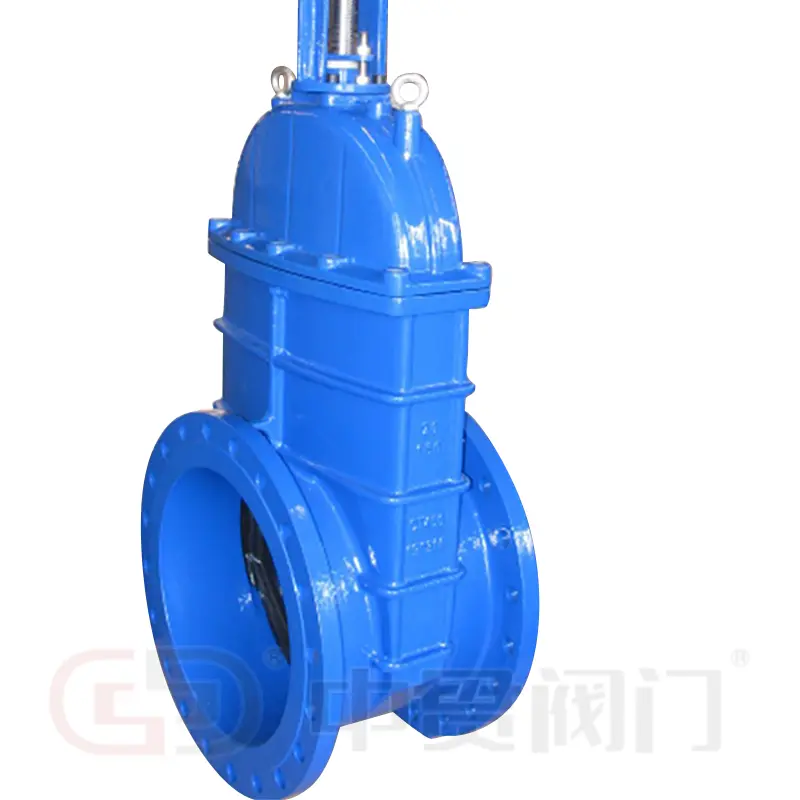
Unveiling the Excellence
Understanding the technical specifications is crucial for selecting the right valve. Here is a detailed breakdown of the standard parameters for our high-performance gate valves.
Detailed Specifications List:
-
Body Material: Manufactured from high-quality materials including Ductile Iron, Cast Carbon Steel (WCB, WCC, LCB), Stainless Steel (CF8, CF8M), and Brass to ensure durability and corrosion resistance for various media.
-
Gate Type: Flexible Wedge, Solid Wedge, or Split Wedge, chosen based on pressure and temperature requirements to prevent binding.
-
Size Range: From a compact 2 inches (DN50) to a robust 48 inches (DN1200), catering to both residential and large-scale industrial pipelines.
-
Pressure Class: Available in a wide range of pressure ratings, including ANSI 125, 150, 300, 600, and 900, ensuring reliability under high-pressure conditions.
-
End Connection: Options include Flanged (RF, RTJ), Threaded (NPT, BSP), Socket Weld, and Butt Weld ends for a secure and leak-proof installation.
-
Temperature Range: Engineered to perform in extreme conditions, with a standard operating temperature range from -29°C to 425°C (-20°F to 800°F), depending on the seat and seal materials.
-
Stem Type: Rising stem design for clear visual indication of the valve position (open or closed).
-
Actuation: Can be operated manually via a handwheel or automated with electric, pneumatic, or hydraulic actuators for integration into modern control systems.
-
Seat & Seal: Premium materials like reinforced graphite, PTFE, or metal-to-metal seating ensure a bubble-tight seal and long service life.
For a quick comparison of our standard product series, refer to the table below:
| Product Series | Primary Material | Pressure Rating (ANSI) | Size Range (Inches) | Typical Application |
|---|---|---|---|---|
| ZG-GV-01 | Ductile Iron | 150 / 300 | 2" - 24" | Water & Wastewater |
| ZG-GV-02 | Carbon Steel | 150 - 600 | 2" - 36" | Oil, Gas, Steam |
| ZG-GV-03 | Stainless Steel 316 | 150 - 600 | 2" - 12" | Corrosive Chemicals |
| ZG-GV-04 | Brass | 150 | 2" - 4" | Residential Plumbing |
This table illustrates just a snapshot of our capabilities. At Zhejiang Zhongguan Valve Manufacture Co., Ltd., we pride ourselves on customization, tailoring each valve to meet the precise demands of your project.
Your Top Questions Answered
Q: Can a gate valve be used for throttling or regulating flow?
A: It is highly discouraged to use a gate valve for throttling purposes. When partially open, the gate can cause turbulence and erosion of the disc and seats, leading to premature failure and leakage. For flow control, a globe valve or a ball valve is a more appropriate and efficient choice.
Q: What is the main difference between a gate valve and a ball valve?
A: The core difference lies in their operation and design. A gate valve uses a rising gate to start or stop flow and is best for isolation in the fully open or closed position. A ball valve uses a rotating ball with a bore. While also used for on/off service, ball valves can be used for moderate throttling and offer quicker operation. Gate valves are often preferred for larger pipe diameters and high-pressure applications where a tight seal is paramount.
Q: How often should a gate valve be maintained, and what does maintenance involve?
A: For valves in continuous service, an annual inspection is recommended. Maintenance frequency depends on the operating conditions (e.g., cycles, pressure, temperature, fluid abrasiveness). Maintenance typically involves checking for external leaks, lubricating the stem threads (if applicable), and exercising the valve—meaning opening and closing it completely—to prevent it from seizing. For internal inspection or repacking, the valve must be isolated and depressurized. Our valves at Zhejiang Zhongguan are built for longevity, but regular upkeep is key to maximizing their operational life.
Why Choose Our Gate Valves?
Selecting a valve is about more than just specifications; it's about trust and performance. Our products are engineered with precision, subjected to rigorous quality control tests, and certified to meet international standards. We don't just sell valves; we provide solutions that enhance the safety, efficiency, and reliability of your operations. Our commitment to excellence has made Zhejiang Zhongguan Valve Manufacture Co., Ltd. a trusted name globally.
When your project demands a valve that guarantees a perfect seal, minimal pressure loss, and unwavering reliability under pressure, the choice is clear. Make the informed decision for your infrastructure.
For more detailed catalogs, custom quotes, or technical consultation, do not hesitate to contact our expert team at Zhejiang Zhongguan Valve Manufacture Co., Ltd. today. Let us help you find the perfect valve solution.