

How Does Stainless Steel Pipe Drive Reliability in the Oil and Gas Industry?
2025-09-29
The oil and gas industry operates in one of the most demanding environments on earth, where extreme pressures, high temperatures, corrosive chemicals, and fluctuating environmental conditions are constant challenges. In such a setting, material selection is not just a technical decision—it is a matter of safety, reliability, and long-term operational efficiency. Stainless steel pipe for oil and gas has emerged as the backbone of fluid transport and structural systems across exploration, drilling, refining, and distribution.
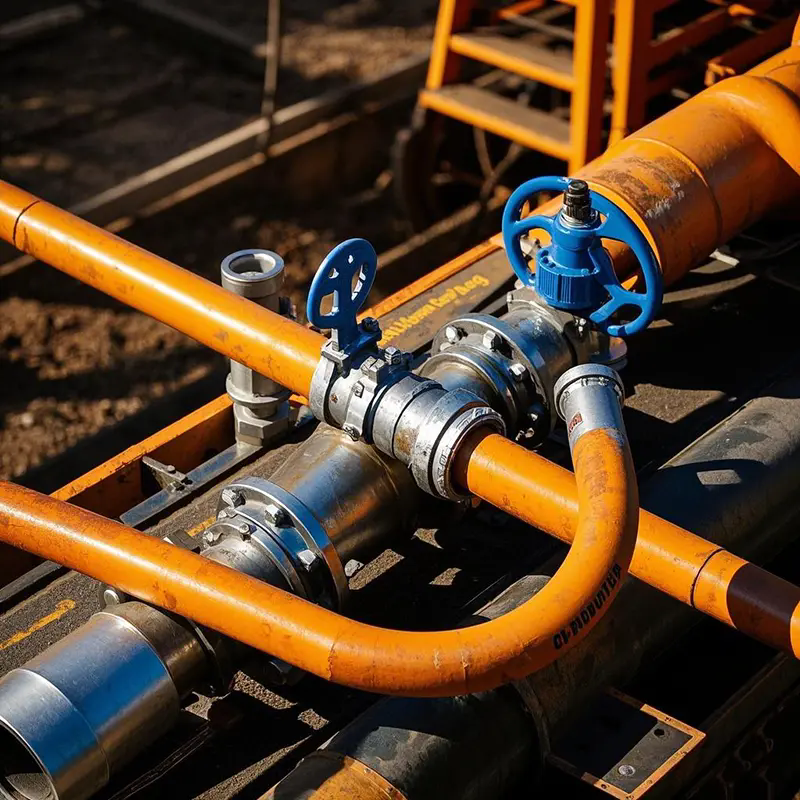
So, how does stainless steel pipe play this crucial role? The answer lies in the unique combination of mechanical strength, corrosion resistance, and adaptability. Unlike carbon steel or other alloys, stainless steel can withstand aggressive hydrocarbons, acidic gases such as H₂S and CO₂, and seawater environments without rapid deterioration. This resilience ensures that oil rigs, refineries, and pipelines can operate for decades with minimal downtime.
From offshore rigs to onshore refineries, stainless steel provides a crucial balance: it resists cracking, combats pitting corrosion, and retains strength even at cryogenic or extremely high temperatures. It is also adaptable to modern welding technologies, ensuring seamless integration into complex pipeline networks. These factors make stainless steel not only a technical solution but also a strategic investment.
How Material Properties Define the Performance of Stainless Steel Pipe for Oil and Gas
The strength of stainless steel lies in its material science. At its core, stainless steel is an iron-based alloy containing chromium (typically above 10.5%), nickel, molybdenum, and other elements that create a passive oxide layer on the surface. This invisible film provides self-healing corrosion resistance, which is particularly valuable in oil and gas operations where exposure to salt water, sour gas, and chemicals is inevitable.
Different grades of stainless steel serve different purposes:
-
Austenitic stainless steels (e.g., 304, 316, 317L): Known for high corrosion resistance and toughness at both high and low temperatures.
-
Duplex stainless steels (e.g., 2205, 2507): Provide a balance of strength and resistance to stress corrosion cracking, making them suitable for offshore applications.
-
Martensitic and ferritic stainless steels: Used in applications where wear resistance and moderate corrosion resistance are priorities.
To better illustrate technical performance, the following table summarizes key parameters of stainless steel pipe commonly used in oil and gas systems:
| Parameter | Specification Range | Application Impact |
|---|---|---|
| Grades | 304, 316, 317L, 2205, 2507, 904L | Tailored to specific oil & gas conditions |
| Outside Diameter | 6mm – 1200mm | Covers everything from small flow lines to main transmission |
| Wall Thickness | 0.5mm – 50mm | Handles both low-pressure and high-pressure transport |
| Operating Temperature Range | -196°C to +800°C | Suitable for cryogenic LNG to superheated steam |
| Tensile Strength | 485 MPa – 900 MPa | Provides mechanical integrity under stress |
| Corrosion Resistance | High (resistant to H₂S, CO₂, chloride ions) | Ensures longevity in sour and offshore environments |
| Standards | ASTM A312, API 5LC, ISO 3183 | Compliance ensures safety and global acceptance |
These parameters highlight why stainless steel is often selected over alternatives. In harsh environments where carbon steel might corrode in a matter of months, stainless steel remains reliable for years, minimizing replacement costs and ensuring continuous flow of oil and gas products.
The reliability of stainless steel pipe also extends to its weldability and machinability. With advancements in TIG, MIG, and orbital welding, operators can construct pipelines with fewer weak points, reducing the likelihood of leaks. Furthermore, the pipe’s dimensional consistency and precision machining make it easier to install and maintain in complex systems where accuracy is critical.
How Stainless Steel Pipe Improves Safety and Sustainability in Oil and Gas Operations
Safety is the single most important factor in oil and gas operations. A single pipeline rupture can result in catastrophic spills, explosions, or environmental contamination. Stainless steel pipe directly supports safety initiatives by reducing the probability of mechanical failure. Its resistance to pitting, stress corrosion cracking, and erosion means fewer leaks and more predictable performance over decades.
Sustainability is another rising priority. Oil and gas companies face increasing pressure from regulators, investors, and the public to reduce environmental impact. Stainless steel pipe contributes to these goals in two key ways:
-
Longevity: Because stainless steel lasts longer, it reduces the frequency of replacements and repairs, thereby minimizing material waste.
-
Recyclability: Stainless steel is 100% recyclable without loss of properties. Once decommissioned, pipes can be reprocessed into new stainless steel products, supporting a circular economy.
How does stainless steel pipe specifically improve sustainability in offshore oil rigs? Offshore platforms face relentless attack from seawater corrosion, which weakens carbon steel structures quickly. Using duplex or super-duplex stainless steel, operators extend the service life of subsea pipelines and risers, cutting the need for constant repairs and reducing the carbon footprint of replacements.
Onshore, stainless steel is equally valuable. Refineries and petrochemical plants deal with aggressive chemicals such as sulfuric acid, hydrochloric acid, and high-chloride feedstocks. Stainless steel’s passive protective layer resists these corrosive agents, keeping systems safe and extending operational cycles.
Additionally, stainless steel pipe supports hydrogen blending and carbon capture projects—two areas gaining attention in the transition toward cleaner energy. Hydrogen embrittlement, a challenge for many metals, can be managed through specific stainless steel grades, ensuring future adaptability of pipeline infrastructure.
How to Select the Right Stainless Steel Pipe for Oil and Gas Projects
Choosing the right stainless steel pipe is not a one-size-fits-all decision. Engineers must consider the type of hydrocarbons being transported, pressure and temperature conditions, environmental exposure, and compliance with industry standards. Below are some practical selection guidelines:
-
Identify corrosive agents: For high-chloride offshore environments, duplex or super-duplex stainless steels (2205, 2507) are recommended. For moderate environments, 316L may suffice.
-
Evaluate temperature range: Cryogenic LNG pipelines require grades with toughness at very low temperatures (e.g., 304L), while high-temperature steam transport may call for heat-resistant alloys.
-
Check pressure requirements: Wall thickness and tensile strength should match system design pressures, as outlined in ASTM and API standards.
-
Consider welding needs: Pipes must match welding techniques to ensure integrity. Some duplex grades require precise welding control to avoid microstructural weakness.
-
Balance cost and life-cycle value: While stainless steel pipe may require higher initial investment than carbon steel, its extended service life and reduced maintenance costs often result in lower total cost of ownership.
Common FAQs about Stainless Steel Pipe for Oil and Gas
Q1: How does stainless steel pipe prevent corrosion in oil and gas environments?
A1: Stainless steel contains chromium, which forms a self-repairing passive oxide layer on the surface. This layer prevents corrosive agents such as H₂S, CO₂, and chloride ions from penetrating the metal. As a result, stainless steel pipe offers longer service life and more reliable performance compared to carbon steel.
Q2: How do I choose between austenitic and duplex stainless steel pipe for my project?
A2: Austenitic stainless steels (e.g., 316L) are ideal for general corrosion resistance in less extreme environments, while duplex stainless steels (e.g., 2205, 2507) offer higher strength and superior resistance to stress corrosion cracking, making them suitable for offshore and sour gas conditions. The choice depends on the exact operating environment and required service life.
In the oil and gas sector, where reliability, safety, and efficiency are critical, stainless steel pipe continues to prove its unmatched value. Its resistance to corrosion, adaptability to extreme conditions, and long service life make it the preferred choice for both onshore and offshore projects. Beyond performance, stainless steel supports sustainability through recyclability and reduced maintenance demands, aligning with global environmental goals.
Shuangsen is dedicated to delivering stainless steel pipe solutions designed to meet the stringent demands of the oil and gas industry. With expertise, precision manufacturing, and compliance with international standards, Shuangsen ensures that every pipeline contributes to safer and more sustainable energy production. For inquiries, technical support, or project consultation, please contact us today.