

How Does Instrument Transformer Work?
2026-06-01
Abstract
Instrument transformers are essential components in modern electrical power systems, enabling safe measurement, monitoring, and protection of high-voltage and high-current networks. By stepping down electrical parameters to standardized, measurable levels, they ensure that meters, relays, and control devices operate accurately without direct exposure to hazardous voltages. This article explains how instrument transformers work, their types, applications, advantages, and selection considerations, while also addressing common operational challenges and maintenance practices.
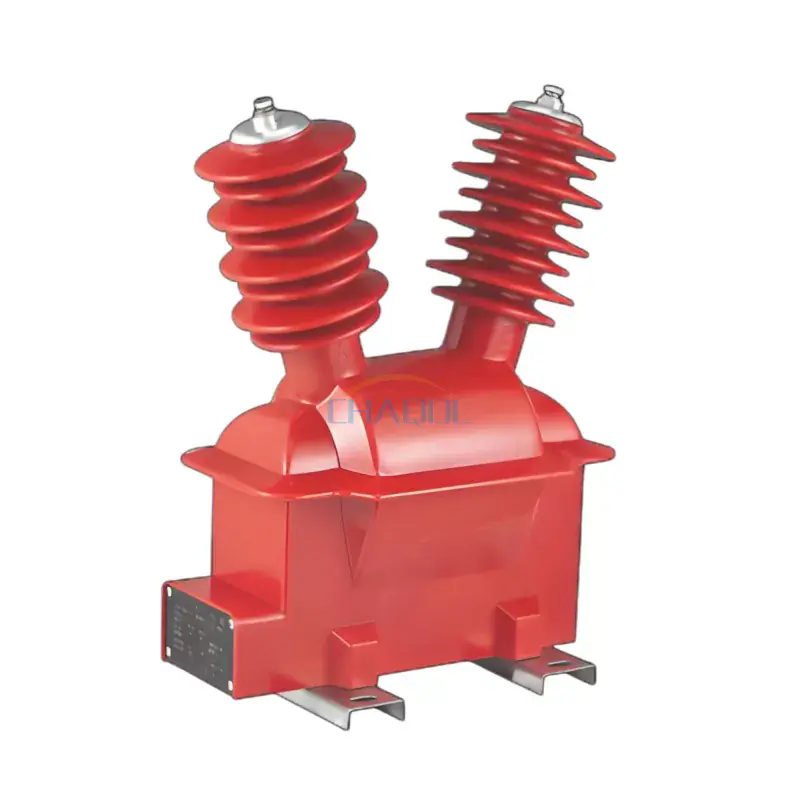
Table of Contents
- Introduction to Instrument Transformers
- What is an Instrument Transformer?
- Types of Instrument Transformers
- Working Principle
- Applications in Power Systems
- Key Benefits
- Selection Guide
- Installation & Safety Considerations
- Common Issues & Troubleshooting
- Maintenance Practices
- FAQ
- Conclusion
Introduction to Instrument Transformers
In electrical power systems, direct measurement of high voltage and high current is neither practical nor safe. Instrument transformers solve this problem by converting large electrical values into standardized, lower values that can be safely measured and monitored. These devices play a critical role in substations, industrial plants, and distribution networks, ensuring system reliability and operator safety.
Without instrument transformers, protective relays and metering systems would be exposed to dangerous electrical levels, making accurate measurement and system protection nearly impossible.
What is an Instrument Transformer?
An instrument transformer is a specialized electrical device designed to transform high current or voltage levels into proportional, lower values suitable for measurement instruments and protective relays. They maintain accuracy while isolating measuring equipment from high-power circuits.
There are two primary functions:
- Scaling down current or voltage for measurement
- Providing electrical isolation for safety
These transformers are widely used in energy metering, fault detection, and system monitoring applications.
Types of Instrument Transformers
Instrument transformers are mainly divided into two categories:
- Current Transformers (CT) – Used to step down high current values to a safe, measurable level.
- Voltage Transformers (VT) or Potential Transformers (PT) – Used to step down high voltage levels for measurement purposes.
Comparison Table:
| Type | Function | Primary Use | Output |
|---|---|---|---|
| Current Transformer (CT) | Reduces current | Current measurement & protection | 1A or 5A standard secondary current |
| Voltage Transformer (VT/PT) | Reduces voltage | Voltage measurement & metering | Standard low voltage output (e.g., 110V) |
Working Principle
The working principle of instrument transformers is based on electromagnetic induction. When alternating current flows through the primary winding, it creates a magnetic field in the core. This magnetic field induces a proportional current or voltage in the secondary winding.
The transformation ratio is carefully designed so that the secondary output is directly proportional to the primary input, allowing accurate scaling of electrical parameters.
- In CTs, primary winding is in series with the load.
- In PTs, primary winding is connected across the supply voltage.
This principle ensures precise measurement while maintaining electrical isolation between high-voltage systems and instruments.
Applications in Power Systems
Instrument transformers are widely used across various sectors:
- Electrical substations for monitoring grid performance
- Power generation plants for system control
- Industrial automation and protection systems
- Energy metering for commercial billing
- Fault detection and relay protection systems
They are indispensable in ensuring system stability and operational safety in both transmission and distribution networks.
Key Benefits
Instrument transformers offer multiple operational advantages:
- Safety: Protects personnel from high-voltage exposure
- Accuracy: Ensures precise measurement of electrical parameters
- Standardization: Provides uniform output values for instruments
- Isolation: Electrically separates measuring devices from power circuits
- System Protection: Enables fast fault detection and response
Selection Guide
Choosing the right instrument transformer depends on several technical and operational factors:
- System voltage and current levels
- Accuracy class requirements
- Burden capacity of connected instruments
- Environmental conditions (temperature, humidity, altitude)
- Insulation class and safety standards
Proper selection ensures long-term stability, reduced measurement errors, and improved system protection performance.
Installation & Safety Considerations
Correct installation is critical to ensure reliable operation of instrument transformers. Poor installation can lead to measurement inaccuracies or equipment failure.
- Ensure correct polarity connection for CTs and PTs
- Never leave CT secondary open-circuited during operation
- Provide proper grounding for safety
- Follow manufacturer installation guidelines strictly
- Use insulated tools and protective equipment during installation
Common Issues & Troubleshooting
Some typical issues include:
- Measurement errors: Often caused by incorrect burden or wiring issues
- Overheating: Due to overload conditions
- Insulation failure: Caused by aging or environmental stress
- Core saturation: Leads to inaccurate readings under fault conditions
Regular inspection and testing help prevent these problems and ensure long-term reliability.
Maintenance Practices
Routine maintenance is essential to ensure consistent performance:
- Periodic insulation resistance testing
- Checking terminal tightness and wiring integrity
- Cleaning dust and contaminants from surfaces
- Verifying accuracy through calibration checks
- Monitoring thermal performance under load conditions
A structured maintenance schedule significantly extends service life and reduces unexpected failures.
FAQ
Q1: Why are instrument transformers necessary?
They enable safe measurement of high voltage and current by stepping them down to manageable levels.
Q2: Can instrument transformers operate without load?
CT secondary should never be open-circuited, while PTs can operate under no-load conditions safely.
Q3: What is the accuracy class?
It defines the permissible error range in measurement under specified conditions.
Q4: Where are they commonly installed?
They are installed in substations, industrial plants, and power distribution systems.
Conclusion
Instrument transformers are fundamental to modern electrical infrastructure, ensuring safe, accurate, and efficient monitoring of high-voltage systems. Their role in measurement, protection, and control cannot be overstated, as they form the backbone of reliable power system operation.
For high-quality solutions and reliable performance in power measurement systems, Anqiang Power delivers advanced instrument transformer technologies designed for industrial-grade applications. If you are looking to upgrade your system or need technical consultation, Anqiang Power is ready to assist you with professional support—contact us today to explore tailored solutions for your power system needs.