

How Does a Non-Linear Load Bank Work?
2026-04-28
Abstract: Non-linear load banks play a critical role in modern electrical systems, allowing for accurate simulation and testing of equipment under non-linear loads such as variable frequency drives, rectifiers, and other electronic devices. This article explores the workings, applications, advantages, and considerations of non-linear load banks, providing practical insights for engineers, facility managers, and decision-makers.
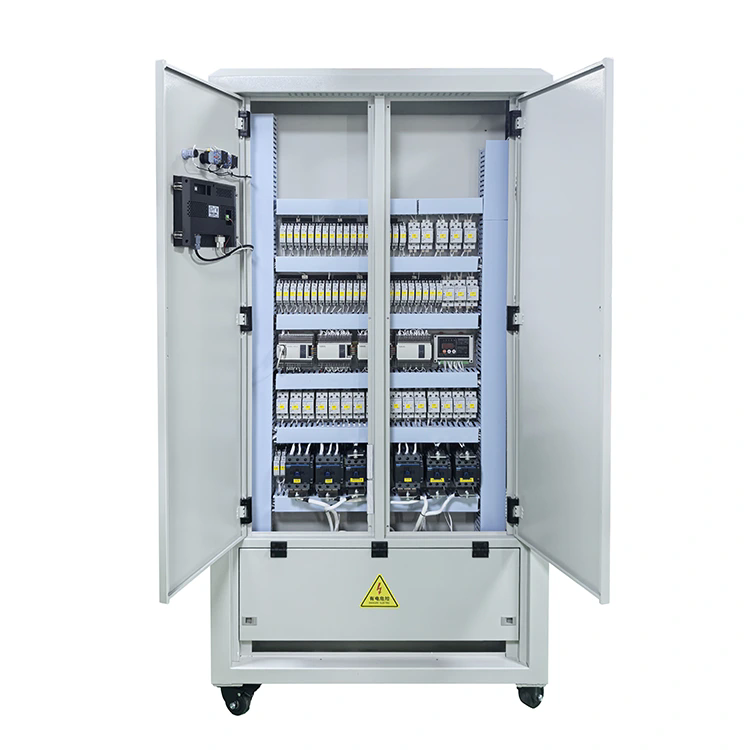
Table of Contents
- Introduction to Non-Linear Load Banks
- Working Principle of Non-Linear Load Banks
- Key Applications in Industry
- Advantages of Using Non-Linear Load Banks
- Selecting the Right Load Bank
- Installation and Maintenance Considerations
- FAQ
- Conclusion & Contact
Introduction to Non-Linear Load Banks
Electrical systems in modern industrial and commercial environments often contain non-linear loads, which can distort voltage and current waveforms, creating challenges for system stability and performance. A Non-Linear Load Bank (NLLB) is designed to simulate these conditions for testing generators, UPS systems, and power distribution networks.
Unlike linear load banks, which create a purely resistive or inductive load, non-linear load banks replicate harmonics and other irregularities caused by modern electronic equipment. This allows engineers to evaluate the real-world performance of electrical systems under demanding conditions.
Working Principle of Non-Linear Load Banks
Non-linear load banks typically consist of:
- Resistive Elements: To simulate normal power consumption.
- Reactive Components: To mimic inductive and capacitive effects.
- Electronic Modules: To generate harmonic distortion similar to non-linear loads.
When connected to a power source, the NLLB draws current in a non-sinusoidal manner, reproducing the harmonic content and reactive power characteristics found in real equipment. This allows precise evaluation of generator capacity, voltage stability, and thermal behavior under realistic conditions.
| Component | Function |
|---|---|
| Resistive Elements | Simulate normal power consumption |
| Reactive Components | Introduce inductive or capacitive effects |
| Electronic Modules | Generate harmonic distortion to mimic real loads |
Key Applications in Industry
Non-linear load banks are used across multiple sectors to ensure reliability and compliance. Key applications include:
- Generator Testing: Evaluate performance under non-linear loading conditions.
- UPS System Validation: Ensure uninterrupted power supply operates correctly under distorted loads.
- Power Quality Analysis: Identify potential harmonic-related issues in industrial plants.
- Commissioning Electrical Installations: Verify equipment performance before full deployment.
Advantages of Using Non-Linear Load Banks
- Accurate Simulation: Replicates real-world load conditions.
- Enhanced Reliability: Detects potential system weaknesses before they cause failures.
- Reduced Downtime: Allows maintenance and testing without affecting live systems.
- Energy Efficiency Analysis: Evaluates how non-linear loads impact overall energy consumption.
Selecting the Right Load Bank
Choosing an appropriate non-linear load bank depends on:
- Load Type: Identify if your system predominantly has resistive, inductive, or mixed loads.
- Power Rating: Ensure the load bank matches the system's maximum expected load.
- Harmonic Simulation Capability: Required if testing modern electronics or VFDs.
- Portability and Installation: Consider mobile vs. fixed load banks depending on site requirements.
RST offers a range of non-linear load banks designed for flexibility, precision, and compliance with international standards. You can view their product line at RST Non-Linear Load Bank.
Installation and Maintenance Considerations
Proper installation and maintenance ensure the longevity and reliability of non-linear load banks:
- Ventilation: Adequate airflow is essential to prevent overheating.
- Regular Inspection: Check resistive and reactive elements for wear or damage.
- Calibration: Periodically verify harmonic generation accuracy for precise testing.
- Safety Measures: Ensure proper grounding, protective devices, and operator training.
FAQ
- Q1: What distinguishes a non-linear load bank from a linear one?
- A: Non-linear load banks simulate harmonics and irregular power draw, whereas linear banks only draw consistent, sinusoidal current.
- Q2: Can non-linear load banks test both generators and UPS systems?
- A: Yes, they are designed to safely evaluate both types of systems under realistic load conditions.
- Q3: How often should a non-linear load bank be maintained?
- A: Generally, maintenance and inspection should occur every 6-12 months, depending on usage frequency.
- Q4: Are non-linear load banks portable?
- A: Some models are mobile for temporary site testing, while others are fixed for permanent installations.
Conclusion & Contact
Non-linear load banks are essential for modern electrical testing, ensuring that generators, UPS systems, and other equipment operate efficiently under real-world conditions. By simulating harmonic distortion and non-linear loads, engineers can prevent system failures, optimize performance, and reduce downtime.
RST provides a comprehensive range of non-linear load banks tailored to diverse industry needs. Contact us today to find the ideal solution for your facility and ensure your electrical systems perform flawlessly.