

How Does a Falling Film Evaporator Improve Efficiency in Industrial Concentration?
2026-06-22
Abstract
A falling film evaporator is a highly efficient thermal separation device widely used in chemical, pharmaceutical, food processing, and wastewater treatment industries. It is designed to gently and rapidly concentrate heat-sensitive liquids by forming a thin liquid film along heated tubes, enabling fast evaporation with minimal thermal degradation. This article explores its working principle, structural design, advantages, limitations, industrial applications, and optimization strategies. It is intended to help engineers, procurement managers, and plant operators understand how to select and operate a falling film evaporator for maximum productivity and energy efficiency.
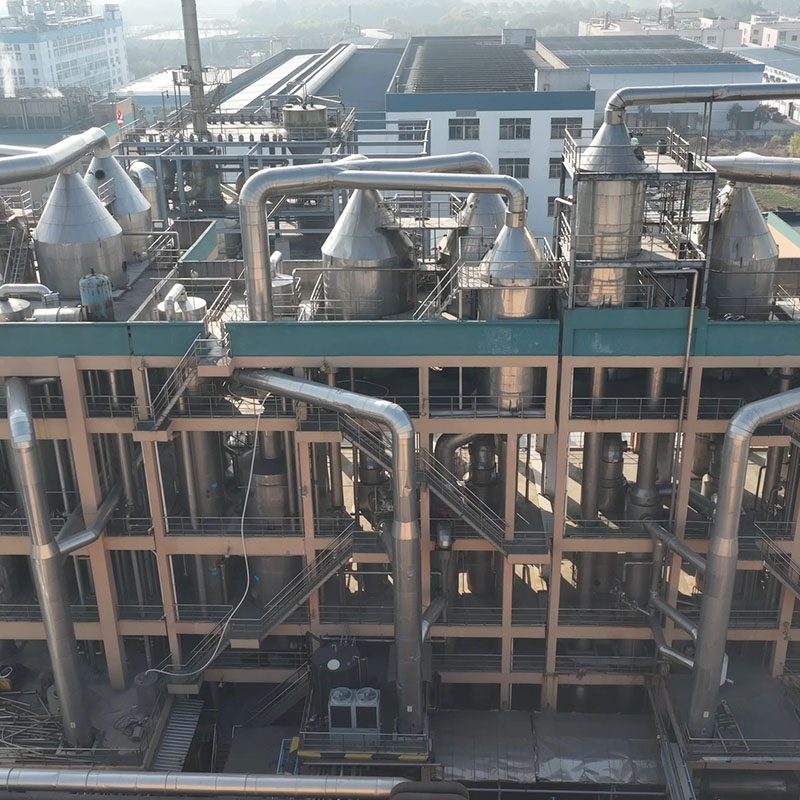
Table of Contents
- Working Principle of Falling Film Evaporator
- Key Structural Components
- Core Advantages in Industrial Use
- Industrial Applications
- Comparison with Other Evaporators
- Operational Challenges and Solutions
- Maintenance and Optimization Strategies
- Conclusion and Engineering Value
Working Principle of Falling Film Evaporator
The falling film evaporator operates on a simple yet highly efficient thermal principle. Liquid feed is distributed evenly at the top of a vertical heating tube bundle. Under gravity, the liquid forms a thin film flowing downward along the inner tube walls. Meanwhile, steam or thermal energy is applied externally to heat the tube surfaces, causing rapid evaporation of the liquid film.
The key advantage lies in the thin film formation, which significantly increases the heat transfer coefficient. Because the liquid is not deeply pooled or agitated, it minimizes residence time and reduces thermal damage to sensitive materials such as proteins, pharmaceuticals, and bioactive compounds.
Key Structural Components
A falling film evaporator system is composed of several integrated components that work together to ensure stable operation and efficient evaporation.
- Distribution System: Ensures uniform liquid distribution at the top of the tubes.
- Evaporation Tubes: Vertical tubes where thin film formation occurs.
- Heating Chamber: Uses steam or hot media to supply thermal energy.
- Separator: Separates vapor from concentrated liquid.
- Condensation System: Condenses evaporated vapor for recovery or reuse.
- Vacuum System (optional): Lowers boiling point for heat-sensitive materials.
The design of these components directly affects evaporation efficiency, scaling resistance, and operational stability.
Core Advantages in Industrial Use
Falling film evaporators are preferred in many industries due to their high efficiency and gentle processing characteristics. Below are their main advantages:
- High Heat Transfer Efficiency: Thin film ensures rapid thermal exchange.
- Low Thermal Degradation: Short residence time protects sensitive materials.
- Energy Saving: Efficient vapor reuse reduces steam consumption.
- Continuous Operation: Suitable for large-scale industrial production.
- Low Pressure Drop: Reduces energy loss across the system.
These benefits make the system particularly attractive for industries where product quality and energy efficiency are equally important.
Industrial Applications
Falling film evaporators are widely applied in industries requiring concentration or solvent recovery processes. Their versatility makes them a core component in modern process engineering.
- Chemical manufacturing for solvent recovery and concentration
- Food industry for milk, juice, and sugar concentration
- Pharmaceutical production for active ingredient purification
- Environmental engineering for wastewater treatment
- Biotechnology for protein and enzyme concentration
In each application, the system provides a balance between high throughput and gentle thermal processing, which is essential for maintaining product integrity.
Comparison with Other Evaporators
| Type | Heat Efficiency | Product Sensitivity Suitability | Energy Consumption | Typical Use |
|---|---|---|---|---|
| Falling Film Evaporator | High | Excellent | Low | Food, Pharma, Chemicals |
| Rising Film Evaporator | Medium | Moderate | Medium | Simple liquid concentration |
| Forced Circulation Evaporator | Medium | Good for viscous fluids | High | Crystallization processes |
| Natural Circulation Evaporator | Low to Medium | Limited | Medium | Basic industrial evaporation |
This comparison highlights why falling film evaporators are often selected when both efficiency and product protection are critical design requirements.
Operational Challenges and Solutions
Despite its advantages, the falling film evaporator system requires proper design and operation to avoid performance issues.
- Uneven Liquid Distribution: Can cause dry spots and reduce efficiency. Solution: optimize distributor design.
- Scaling and Fouling: Mineral deposits reduce heat transfer. Solution: implement CIP (clean-in-place) systems.
- Flow Instability: Poor film formation affects evaporation. Solution: maintain correct feed rate and viscosity control.
- Vacuum Fluctuation: Impacts boiling point stability. Solution: ensure reliable vacuum system maintenance.
Proper engineering design and routine monitoring are essential to maintain stable long-term performance.
Maintenance and Optimization Strategies
To maximize performance and lifespan, a structured maintenance strategy is required for falling film evaporators.
- Regular inspection of tube surfaces for scaling
- Calibration of flow distribution systems
- Monitoring steam pressure and vacuum stability
- Scheduled cleaning cycles using chemical or mechanical methods
- Performance benchmarking to detect efficiency decline
Advanced plants also integrate automation systems for real-time monitoring, which helps reduce downtime and improves process consistency.
Conclusion and Engineering Value
The falling film evaporator remains one of the most efficient and widely adopted solutions for industrial concentration processes. Its ability to deliver high heat transfer rates while protecting heat-sensitive materials makes it indispensable in modern production environments. When properly designed and maintained, it significantly reduces energy consumption and improves product quality consistency.
For industries seeking reliable evaporation systems with optimized thermal efficiency, Jiangsu Grand Drying and Concentrating Equipment Co. Ltd. provides advanced engineering solutions tailored to different production needs. Their expertise in evaporation technology ensures stable performance, energy optimization, and long-term operational reliability.
To learn more about system configurations, customization options, or technical support, please contact us and explore how a professionally designed falling film evaporator system can enhance your production efficiency and process stability.