

How Does a Dehumidifying Dryer Improve Plastic Processing Efficiency?
2025-09-19
In the competitive world of plastics manufacturing, consistent quality and efficiency are key to maintaining an edge. One of the most significant challenges faced by manufacturers is controlling moisture content in raw plastic materials. Even small amounts of moisture can cause serious problems such as brittleness, discoloration, surface defects, and reduced mechanical strength in the final product. This is where the Dehumidifying Dryer has become indispensable.
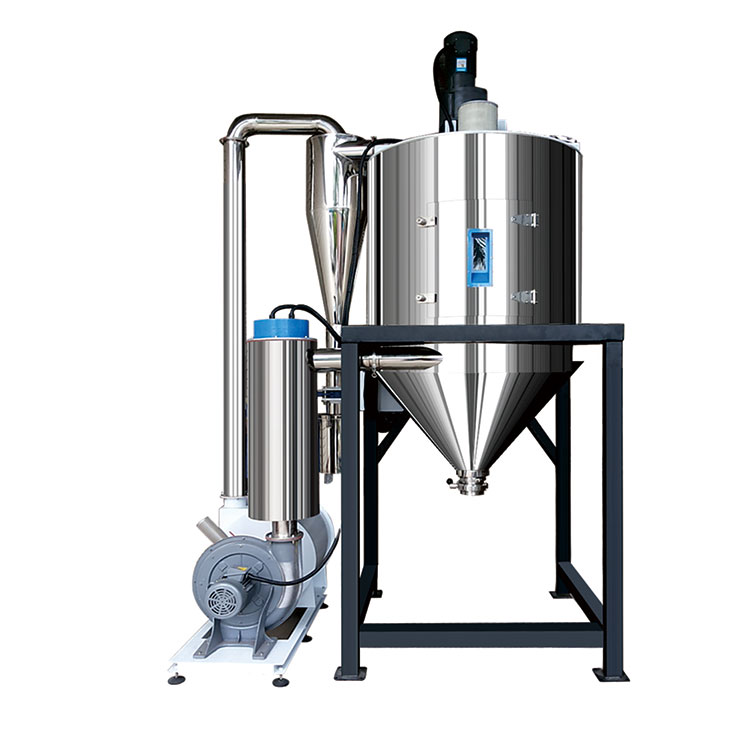
Unlike standard hot air dryers, which simply heat and circulate air, a dehumidifying dryer employs advanced drying technology to remove moisture at the molecular level. This ensures raw materials like PET, PA, PC, ABS, and PMMA achieve the required low dew point before entering the molding process. By maintaining precise and consistent drying conditions, manufacturers can improve productivity, reduce scrap rates, and meet the stringent demands of industries such as automotive, electronics, medical devices, and packaging.
To better understand how the equipment functions, let’s examine its technical parameters:
| Parameter | Details |
|---|---|
| Drying Principle | Closed-loop system with molecular sieve |
| Applicable Materials | PET, PA, PC, ABS, PMMA, PBT, PPS, etc. |
| Dew Point Range | -40°C to -70°C |
| Drying Temperature | Adjustable 60°C – 180°C |
| Drying Capacity | 20 kg/hr – 2000 kg/hr |
| Control System | PLC with touchscreen interface |
| Energy Efficiency | Up to 30% lower energy consumption vs. hot air dryers |
| Material Contact Surfaces | Stainless steel for durability and hygiene |
| Safety Features | Overheat protection, alarm systems |
| Optional Add-ons | Material conveying system, hopper loaders |
This table shows that a Dehumidifying Dryer is far more than a standard dryer—it is a precision-engineered solution that directly impacts the quality of plastic products.
How Does a Dehumidifying Dryer Function and Why Is It Superior?
To understand the superiority of a Dehumidifying Dryer, it is necessary to explore how it works and why it consistently outperforms traditional drying methods.
Working Mechanism
The core principle behind the machine lies in its closed-loop circulation system combined with a molecular sieve. Here’s how it operates:
-
Air Drying: Moist air is passed through a desiccant (molecular sieve), which removes water molecules and generates ultra-dry air.
-
Heating: The dehumidified air is then heated to the set drying temperature.
-
Material Drying: This hot, dry air is circulated through the raw plastic granules, extracting moisture deep within the polymer chains.
-
Regeneration: The saturated desiccant is regenerated using heat so it can continuously absorb moisture during subsequent cycles.
This cycle ensures a low dew point drying environment, which is essential for engineering plastics that are highly hygroscopic.
Advantages Over Conventional Dryers
-
Consistent Dew Point: Maintains ultra-low moisture conditions, critical for hygroscopic resins.
-
Higher Product Quality: Prevents bubbles, cracks, and loss of tensile strength in molded products.
-
Energy Savings: Advanced closed-loop designs consume less energy compared to hot air dryers.
-
Process Stability: Ensures continuous production without fluctuations in drying conditions.
-
Versatility: Handles a wide range of plastics, including sensitive engineering resins.
By ensuring precision drying, Dehumidifying Dryers help manufacturers not only meet but exceed industry standards in product consistency and durability.
How Do Dehumidifying Dryers Impact Production Efficiency and Sustainability?
In today’s market, companies are not only focused on quality but also on operational efficiency and sustainability. A Dehumidifying Dryer contributes to both areas in measurable ways.
1. Improved Production Efficiency
When plastic resins are properly dried, molding and extrusion processes run smoothly with fewer interruptions. Key benefits include:
-
Lower Scrap Rates: Reduced defects mean less wasted material.
-
Faster Cycle Times: Stable processing conditions shorten production cycles.
-
Reduced Downtime: Less frequent equipment maintenance caused by moisture-related issues.
2. Energy Conservation
Energy efficiency is a critical factor in modern manufacturing. Advanced dehumidifying dryers use intelligent systems that optimize air circulation and heating. Compared to traditional dryers, they can reduce energy consumption by up to 30%, significantly cutting operational costs.
3. Extended Equipment Life
By minimizing moisture-related processing issues, dehumidifying dryers also protect downstream machinery such as injection molding and extrusion systems. This leads to longer equipment life and reduced maintenance expenses.
4. Sustainability and Environmental Responsibility
-
Less Waste: Lower defect rates translate directly into material conservation.
-
Reduced Emissions: Optimized energy use supports global carbon reduction goals.
-
Recyclability Support: Ensures recycled plastics can be effectively reprocessed without degradation caused by residual moisture.
In a manufacturing environment where green production practices are becoming mandatory, the dehumidifying dryer serves as both a performance booster and a sustainability tool.
How Can Businesses Integrate Dehumidifying Dryers for Maximum ROI?
Investing in a Dehumidifying Dryer is not merely about adding equipment—it is about transforming production workflows for long-term gains. Companies can maximize returns on their investment by applying strategic integration practices:
1. Material-Specific Drying Programs
Since different plastics absorb different amounts of moisture, customized drying programs are essential. Advanced systems allow precise temperature and dew point adjustments, ensuring optimal results for each material type.
2. Automation and Smart Controls
Modern dryers integrate with Industry 4.0 systems, enabling real-time monitoring, remote adjustments, and predictive maintenance. By combining with PLC and IoT connectivity, businesses can achieve superior process control and traceability.
3. Scaling Capacity
Manufacturers should choose dryers that match their throughput requirements. With capacities ranging from 20 kg/hr to over 2000 kg/hr, businesses can scale their drying operations seamlessly as production demands grow.
4. Workforce Training
Operators should be trained not only on system handling but also on material drying principles, ensuring the equipment is used to its full potential.
Frequently Asked Questions
Q1: How does a Dehumidifying Dryer differ from a hot air dryer?
A Dehumidifying Dryer uses a closed-loop system with a desiccant to achieve ultra-low dew points, ensuring moisture is removed at the molecular level. Hot air dryers, by contrast, only circulate heated air and cannot achieve the same level of drying precision, which can lead to poor product quality.
Q2: What plastics benefit most from Dehumidifying Dryers?
Plastics such as PET, PA, PC, PMMA, and ABS—classified as hygroscopic resins—benefit the most because they naturally absorb moisture from the air. Without proper drying, these materials can develop bubbles, brittleness, or discoloration during molding.
In an era where quality, efficiency, and sustainability define success, the Dehumidifying Dryer stands out as a transformative solution for the plastics industry. Its ability to achieve ultra-low dew points, maintain consistent drying conditions, and reduce energy consumption makes it indispensable for manufacturers across automotive, medical, electronics, and packaging sectors.
Businesses looking for long-term growth will find that investing in advanced drying technology improves production efficiency, reduces costs, and ensures compliance with international quality standards.
At Niasi, we are dedicated to delivering high-performance Dehumidifying Dryers designed to meet global manufacturing demands. To learn how our solutions can enhance your production line and maximize your return on investment, we invite you to contact us today for more information.