

How Can Harmless Treatment Humidifier Be Applied in Daily Environmental Control?
2025-12-25
Abstract
Harmless Treatment Humidifier is an environmentally oriented humidification solution designed to regulate air moisture levels while minimizing secondary pollution, health risks, and energy waste. This article provides a comprehensive and structured discussion on how Harmless Treatment Humidifier operates, where it can be applied, and why it is increasingly adopted in industrial, commercial, and public environments.
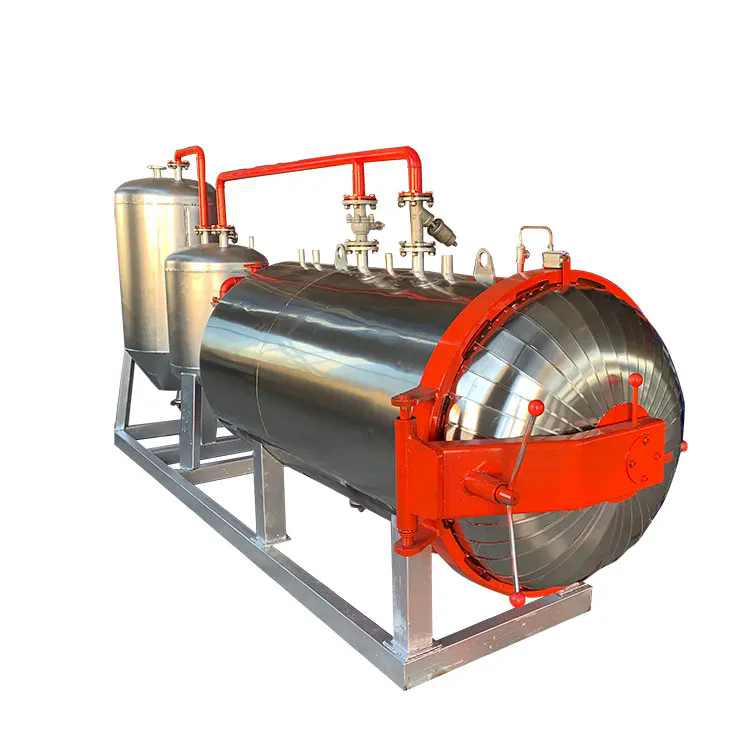
Table of Contents
- 1. How Does a Harmless Treatment Humidifier Work in Environmental Systems?
- 2. How Are Technical Parameters Defined for Harmless Treatment Humidifier?
- 3. How Can Harmless Treatment Humidifier Be Deployed Across Multiple Scenarios?
- 4. How Is the Future Development of Harmless Treatment Humidifier Shaped?
1. How Does a Harmless Treatment Humidifier Work in Environmental Systems?
Harmless Treatment Humidifier refers to a class of humidification equipment engineered with a core objective: to introduce moisture into the air without generating chemical residue, biological contamination, or harmful byproducts. Unlike conventional humidifiers that may rely on untreated water evaporation or chemical additives, this system integrates physical treatment, controlled atomization, and hygienic water management.
The working logic begins with raw water intake. Water is subjected to multi-stage filtration and physical treatment to remove suspended solids, minerals that cause scaling, and microorganisms. Once treated, the water enters a precision atomization module. This module converts water into micro-scale droplets that can rapidly evaporate into the air without forming visible condensation or wet surfaces.
Airflow coordination plays a critical role. The humidifier synchronizes atomization with controlled airflow, ensuring even distribution across the target space. Sensors continuously monitor ambient humidity, temperature, and operating pressure. Based on real-time feedback, the system adjusts output dynamically, avoiding over-humidification and energy waste.
From an environmental engineering perspective, the “harmless treatment” concept emphasizes three dimensions: human safety, material compatibility, and ecological responsibility. By eliminating chemical additives and suppressing microbial growth within the system, the humidifier supports indoor air quality standards while maintaining stable moisture levels.
2. How Are Technical Parameters Defined for Harmless Treatment Humidifier?
Technical parameters determine whether a Harmless Treatment Humidifier can meet professional environmental control requirements. These parameters are typically defined based on application scale, air volume, and regulatory expectations.
Below is a consolidated overview of commonly referenced technical parameters. This presentation format supports clarity while demonstrating engineering professionalism.
| Parameter | Specification Range | Technical Significance |
|---|---|---|
| Humidification Capacity | 1–50 kg/h | Defines moisture output suitable for small rooms to large industrial halls |
| Droplet Size | ≤5 μm | Ensures rapid evaporation without surface wetting |
| Water Treatment Method | Physical filtration + sterilization | Prevents microbial contamination and mineral residue |
| Power Consumption | Low-energy adaptive control | Supports continuous operation with reduced operating costs |
| Control Mode | Automatic / Manual / Integrated BMS | Enables flexible system integration |
| Operating Noise | ≤45 dB | Suitable for noise-sensitive environments |
Each parameter is interdependent. For example, droplet size directly influences evaporation efficiency and hygiene outcomes, while water treatment determines long-term system stability. Professional selection requires matching these parameters to environmental volume, air circulation patterns, and compliance frameworks.
3. How Can Harmless Treatment Humidifier Be Deployed Across Multiple Scenarios?
Harmless Treatment Humidifier is not limited to a single use case. Its design logic supports a wide range of deployment scenarios where air moisture stability is essential.
In industrial manufacturing environments, controlled humidity prevents electrostatic discharge, material deformation, and dust suspension. Electronics assembly lines, textile workshops, and precision machining facilities benefit from stable moisture levels that protect both products and equipment.
In commercial and public buildings, such as offices, libraries, and exhibition halls, the humidifier contributes to occupant comfort and material preservation. Wood structures, paper archives, and sensitive displays require balanced humidity to avoid cracking or warping.
Healthcare and laboratory settings place additional emphasis on hygiene. The harmless treatment mechanism minimizes microbial proliferation and avoids aerosolized contaminants, aligning with clean air management principles.
Agricultural and environmental research facilities also apply these systems to simulate controlled microclimates. Plant growth chambers and ecological testing rooms rely on precise humidity regulation without chemical interference.
Common Questions and Answers About Harmless Treatment Humidifier
Q: How does Harmless Treatment Humidifier prevent secondary pollution?
A: Secondary pollution is prevented through physical water treatment, closed-loop water circulation, and the absence of chemical additives. These measures reduce residue formation and inhibit microbial growth within the system.
Q: How is long-term operational stability maintained?
A: Stability is achieved by integrating automatic flushing, scale prevention mechanisms, and sensor-based feedback control. These features reduce maintenance frequency and performance degradation.
Q: How does the system adapt to changing environmental conditions?
A: Built-in humidity sensors and control algorithms continuously adjust atomization output. This adaptive response ensures consistent humidity levels even under fluctuating temperature or airflow conditions.
4. How Is the Future Development of Harmless Treatment Humidifier Shaped?
The future trajectory of Harmless Treatment Humidifier is shaped by environmental regulation, digitalization, and energy efficiency trends. As air quality standards evolve, demand increases for systems that deliver moisture without compromising health or sustainability.
Integration with intelligent building management systems is a key direction. Data-driven control allows predictive maintenance, remote monitoring, and optimized energy use. This aligns with smart facility management strategies adopted globally.
Material innovation also plays a role. Corrosion-resistant components, antimicrobial surfaces, and modular designs extend service life and simplify upgrades. These advancements reduce total cost of ownership while supporting environmental objectives.
From a regulatory standpoint, harmless treatment concepts align with stricter environmental and occupational safety guidelines. Systems that avoid chemical emissions and biological risks are more likely to meet future compliance requirements.
In this context, manufacturers focusing on engineering transparency, parameter standardization, and application-driven design are positioned to lead market adoption.
As a professional manufacturer and solution provider, Shandong Chengming Environmental Protection Technology Co., Ltd. continues to develop Harmless Treatment Humidifier systems with a focus on environmental responsibility, technical reliability, and application adaptability. Through continuous optimization of treatment logic and system integration, the company supports diverse industries in achieving stable and safe humidity control.
For further technical consultation, parameter customization, or application assessment, contact us to discuss specific environmental requirements and implementation strategies.